
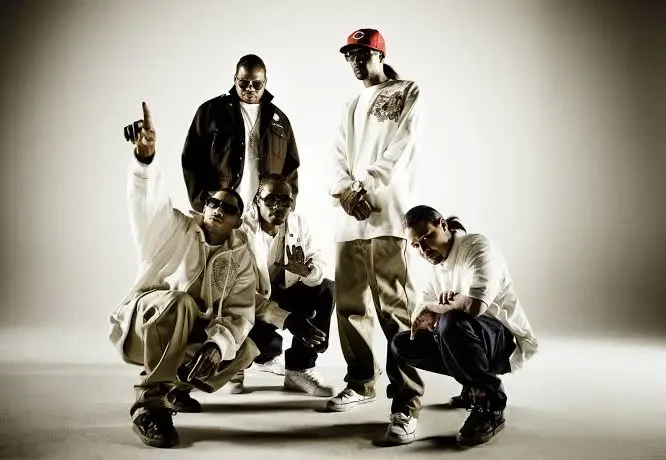
THE STARS WERE ALWAYS THEIRS
How Bone Thugs-N-Harmony Changed Hip-Hop Forever—and Why Their Hollywood Walk of Fame Star Is Long Overdue
By James G. Johnson II | U.G. Digital Magazine
Introduction: Some Legacies Can't Be Measured in Platinum
On any given day, thousands of people stroll down Hollywood Boulevard, stopping to admire the names immortalized beneath their feet. Actors, musicians, directors, comedians, and entertainers from every era are celebrated on the iconic Hollywood Walk of Fame. Each star represents more than fame—it symbolizes a lasting contribution to culture.
For Bone Thugs-N-Harmony, that moment has finally arrived.
For many, the announcement of their Hollywood Walk of Fame star felt overdue. For Cleveland, it felt personal. For hip-hop, it felt necessary.
Long before streaming numbers, viral moments, or social media trends determined success, five young men from Cleveland, Ohio, were creating a sound so revolutionary that the music industry didn't know what to call it. They weren't simply rapping. They weren't simply singing. They weren't following the formulas established by either the East Coast or West Coast.
They built an entirely new language.
More than thirty years later, artists across every corner of hip-hop continue speaking that language.
The Hollywood Walk of Fame is recognizing Bone Thugs-N-Harmony today because the music never stopped evolving around them. In many ways, the industry finally caught up to what Bone created decades ago.
Before Hollywood, There Was East 99th Street
Every legendary story has humble beginnings.
Bone Thugs-N-Harmony's began on Cleveland's east side.
The neighborhoods surrounding East 99th Street weren't filled with opportunity. They were communities where poverty, violence, addiction, and instability often overshadowed dreams. For many young people, simply surviving from one day to the next required resilience.
For Krayzie Bone, Layzie Bone, Bizzy Bone, Wish Bone, and Flesh-n-Bone, music became more than entertainment.
It became hope.
The group originally performed under the name B.O.N.E. Enterpri$e, independently releasing Faces of Death in 1993. Even in those early recordings, listeners could hear something different taking shape.
Their voices intertwined like instruments.
They stacked harmonies where others delivered straightforward verses.
They accelerated syllables without sacrificing clarity.
Their cadences felt spiritual one moment and street-hardened the next.
It wasn't polished.
It wasn't perfect.
But it was unlike anything hip-hop had ever heard.
Sometimes greatness announces itself quietly.
Bone's earliest recordings did exactly that.
The Gamble That Changed Everything
Every great career has one defining moment.
For Bone Thugs-N-Harmony, that moment wasn't winning a Grammy.
It wasn't selling millions of albums.
It wasn't even recording "Tha Crossroads."
It was deciding to leave Cleveland.
Determined to meet Eazy-E, the group traveled to Los Angeles with little more than faith, ambition, and confidence in their music. They reportedly refused to leave without performing for the legendary founder of Ruthless Records.
Imagine the courage that required.
No major label.
No connections.
No guarantee.
Only belief.
When Eazy-E finally listened, he heard exactly what they believed he would.
Originality.
He understood immediately that Bone wasn't trying to imitate anyone else.
He signed them.
That decision changed the trajectory of hip-hop.
The Mentor They Never Forgot
Eazy-E became more than the man who signed Bone Thugs-N-Harmony.
He became family.
He gave them an opportunity when few others would.
He encouraged their individuality rather than asking them to sound like someone else.
That creative freedom proved invaluable.
Then tragedy struck.
In March 1995, Eazy-E passed away from complications related to AIDS.
The loss devastated Bone.
Many believed Ruthless Records would crumble.
Many believed Bone's momentum would disappear.
Instead, they responded in the only way they knew how.
Through music.
"Tha Crossroads" wasn't simply another single.
It became one of the most heartfelt tributes ever recorded in hip-hop.
The song resonated with people grieving loved ones around the world because it wasn't manufactured emotion.
It was real.
The record won a Grammy Award, topped charts internationally, and remains one of the most recognizable songs in hip-hop history.
Bone transformed unimaginable heartbreak into timeless art.
When Hip-Hop Changed Forever
There are artists who become successful. Then there are artists who permanently alter the direction of music. Bone Thugs-N-Harmony belongs in the second category. Before Bone, fast rapping certainly existed. Melodic singing certainly existed. Harmony certainly existed. Bone fused them together in ways no one had ever accomplished. They made technical lyricism accessible. They made melody feel dangerous. They made complexity sound effortless. They made harmonies cool inside gangsta rap.
Today, nearly every major hip-hop artist blends melody with rap in some form. That's no coincidence. Bone proved it could work. The blueprint they created continues shaping today's artists more than three decades later. Without Bone Thugs-N-Harmony, modern melodic rap likely sounds very different. That influence alone justifies their place among music's greatest innovators.
More Than Music —A Brotherhood
What has always made Bone special isn't simply the records. It's the people behind them. Like every family, they've experienced disagreements. They've navigated contract disputes. Business conflicts. Personal struggles. Health scares. Incarceration. Substance abuse. Creative differences. Public misunderstandings. There were moments when fans wondered whether the five members would ever stand together again. Yet somehow, they always found their way home. Perhaps that's because Bone has never been just a group. It's a brotherhood. Brotherhood doesn't require perfection. It requires love. That love has always brought Bone back together.
The Cleveland Blueprint
Bone Thugs-N-Harmony didn't leave Cleveland behind. They carried Cleveland with them. Every interview. Every award show. Every sold-out arena. Every international performance. No matter where they traveled, Cleveland remained part of their identity. That loyalty inspired an entire generation of artists from Northeast Ohio. Before Bone, many local musicians believed national success required leaving Cleveland behind. Bone proved otherwise. They showed young artists that your city isn't something to escape. It's something to represent. Today, nearly every successful Cleveland hip-hop artist stands on a foundation Bone helped build. Their success expanded opportunities for everyone who came after them. That may be their greatest hometown contribution.
A Personal Reflection
For me, Bone Thugs-N-Harmony represents far more than one of the greatest groups in hip-hop history.
They represent possibility.
As a young journalist building what would eventually become U.G. Digital, Bone was among the artists who helped validate independent media. Every member of the group has shown love to our platform over the years through interviews, conversations, features, and continued support. They never treated independent journalism as "less than." Instead, they understood the importance of hometown voices telling hometown stories.
Those moments mattered.
They helped shape U.G. Digital into what it is today.
More importantly, they reflected the character of the men behind the music.
Despite worldwide fame, Bone never forgot Cleveland.
And they never forgot those of us working to elevate the city alongside them.
That loyalty deserves recognition every bit as much as the music itself.
To Be Continued...
Part II will explore:
E. 1999 Eternal and why many consider it the greatest hip-hop album ever recorded.
The making of The Art of War.
The rise of Mo Thugs.
Grammy success and worldwide fame.
The group's biggest challenges and triumphant reunions.
Why Bone's resilience is as legendary as their music.